
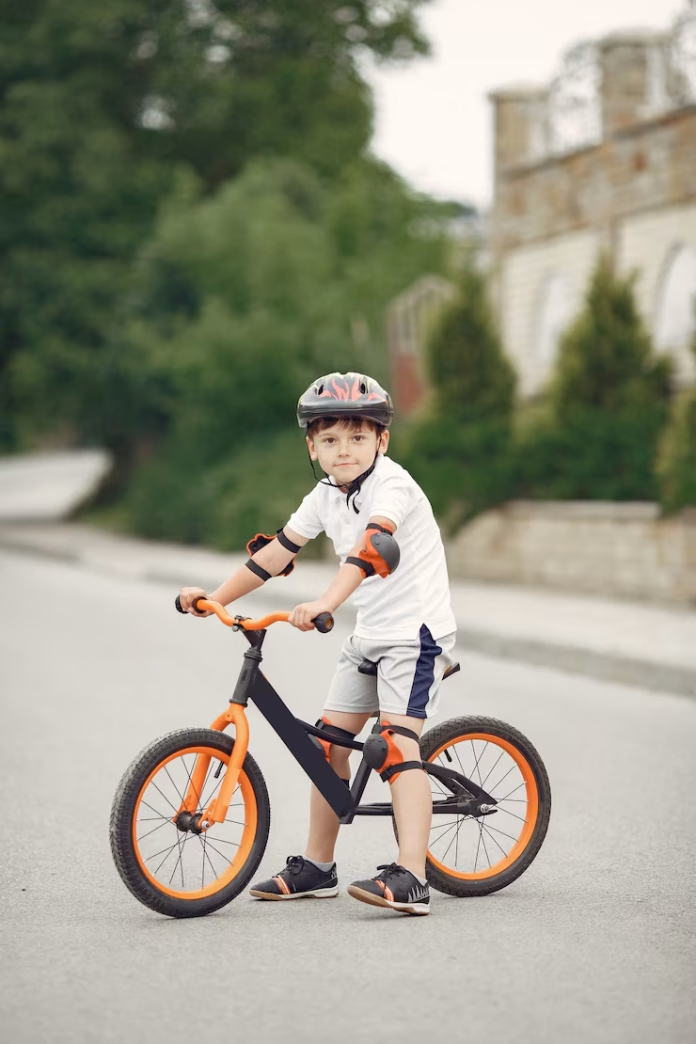

A 10-year-old’s bike purchase may appear straightforward, but it soon gets more complicated when you take into account the many sizes, styles, features, and safety factors that are involved. In addition to ensuring the child’s comfort and safety, a properly sized bicycle can foster a lifetime love of riding. Everything parents need to know about selecting the appropriate bike size for a 10-year-old is covered in this article, including growth considerations, frame geometry, wheel sizes, sizing charts, and much more.
1. Why Children’s Bike Size Is Important
Selecting the appropriate bike size is important for safety, control, and confidence in addition to convenience. A bike that is too big might be hazardous since the youngster may find it difficult to handle, while one that is too little can be uncomfortable and result in bad posture. A child who rides a bike that fits them properly feels more confident and is less likely to be hurt.
2. Knowing How to Interpret Bike Size Measurements
Children’s bikes are generally measured by wheel diameter, as opposed to adult bikes, which are frequently sized by frame dimensions in inches or centimeters. 12″ to 24″ are the most popular wheel sizes for youngsters; 24-inch wheels are usually appropriate for older kids or early teens. The ideal wheel size for a 10-year-old typically ranges from 20 to 26 inches, depending on the child’s height and leg length.
3. A 10-Year-Old’s General Bike Size Guide
Although children differ in height and build, a generic size chart is a useful place to start. It is generally best to use a 24-inch wheel bike for a 10-year-old, who is usually between 4’5″ and 4’9″ (135 cm and 145 cm). Some taller children, however, might be prepared for a 26-inch wheel bike, which is the starting point for adult bike sizing.
Height of Child, Inseam Length, Suggested Wheel Size
4’3″ to 4’9″ and 24″ to 28″ 24-inch wheels
4’10” + 28″ + 26″ wheels
4. How to Accurately Measure Inseam
One of the best methods for figuring out the correct bike size is to measure the inseam. With their shoes off and their legs slightly apart, have your youngster stand against a wall. Measure from the top of the book to the floor to create the illusion of a bike seat. The minimal standover clearance and seat height needed for a comfortable ride are determined in part by this inseam measurement.
5. Frame Fit and Standover Height
The distance between the ground and the bike frame’s top tube, or standover height, is very important. The youngster should have at least one inch of space between their body and the top tube and be able to straddle the bike with both feet flat on the ground. This guarantees both safety and dismounting simplicity.
6. Wheel Dimensions against Frame Shape
Frame geometry can differ between brands and models, but wheel size provides a broad idea of the bike’s size. The handlebar reach, top tube lengths, and frame heights of two 24-inch-wheeled motorcycles may differ. To guarantee a good fit, it is crucial to test the bike or check the specs.
7. Types of Bikes for Kids Ages 10 and Up
Children are prepared to investigate more bike styles based on their interests at the age of ten:
Mountain Bikes (MTBs): Perfect for daring cyclists that like riding off-road.
Hybrid bikes are excellent for cycling on both paved and dirt surfaces.
Road Bikes: For children who enjoy longer rides on paved roads and speed.
BMX bikes: Used for short-distance riding and trick-doing.
Cruisers: Stylish and comfortable, ideal for leisurely cruising.
Always refer to the manufacturer’s size chart because every variety has different sizing details.
8. How to Do an In-Person Bike Fit Test
Take the kid to a bike shop to try out some other models if you can. Ask them to pedal while perched on the saddle and grasping the handlebars. Verify if:
When the pedal is near the bottom, their knees flex a little.
Without bending too much, they can reach the handlebars.
They can comfortably put both feet on the ground and stop the bike.
Make sure the merchant allows returns for sizing problems if you’re shopping online.
9. Modifiable Elements That Enhance Fit
To help customize the fit, many bikes have handlebars and seat posts that can be adjusted. This flexibility is crucial for developing children. To account for growth spurts, some models include slanted top tubes or longer seat tubes. Additionally, seek out bicycles with brake levers that may be adjusted to accommodate little hands.
10. A Look at Bike Weight
The youngster should be able to manage the bike’s weight, particularly when pushing or raising it. Generally speaking, the bike shouldn’t weigh more than 40% of the youngster. Because aluminum frames are lighter than steel, children can handle them more easily.
11. Gear Systems for Riders Ages 10 and Up
Gear systems are introduced by many 24-inch bikes. Multi-speed bikes with six to eight gears are better suited for longer trips and a variety of terrains, even if single-speed cycles are simpler. With the right training, most kids can manage simple shifting by the time they are ten years old. Depending on your child’s coordination, think about either grip shifters or trigger shifters.
12. Safety and Braking Systems
With improved control, the majority of 10-year-olds can go from coaster brakes (backpedal) to hand brakes. Make sure you can reach and adjust the brake levers. V-brakes are simpler to maintain, while disc brakes provide more stopping power, particularly in damp weather.
13. Is Suspension Required?
Although they add weight, suspension forks can attenuate shocks during off-road riding. A rigid fork bike is more efficient and lighter, unless your child is riding mountain terrain. For riding on varied terrain, some models just have front suspension, which is a reasonable compromise.
14. Growth Spurts and the Lifespan of Bikes
Parents frequently question whether to size up their children because they grow up so quickly. Refrain from purchasing a bigger bike in the hopes that they would “grow into it.” An large bike can make control and learning more difficult. Rather, get a bike that fits today and can be adjusted over the course of the following year or two.
15. Confidence building, training, and transition
Some kids might not be comfortable riders even at age 10. Make sure the bike facilitates learning. A step-through frame facilitates mounting, and wider tires provide improved balance. Encouragement and support are essential if your child is switching from a smaller bike or a balancing bike.
16. Add-ons to Make the Ride Better
Remember the extras that make the experience safer and more pleasurable:
A certified safety helmet
Horn or bell
Lights and reflectors
Kickstand
Holder for a water bottle
The bike lock
These accessories contribute to your child’s increased independence and safety when riding a bike.
17. Value and Budgetary Considerations
The cost of children’s bikes varies greatly. Depending on the brand, features, and materials, a dependable 24-inch bike might cost anywhere between $200 and $600. Purchasing a high-quality bike guarantees greater comfort, durability, and resale value when your youngster outgrows it, despite the temptation to choose less expensive ones.
18. New versus Used Purchases
Purchasing a used bike might be cost-effective, particularly for children who are growing quickly. However, make sure no parts are rusted or damaged, check tire quality, brake response, and look for cracks in the frame. Refurbishing a bike with professional assistance or purchasing from a trustworthy secondhand retailer is a wise choice.
19. Promoting a Lifetime Passion for Cycling
Casual riding can become a sport or a lifelong interest with the correct bike. Your youngster should be encouraged to try out various forms of riding, such as group rides, neighborhood adventures, and trail rides. If there are local riding programs, sign them up for them. A well fitted bike increases self-assurance, safety, and the enjoyment of riding.
20. Concluding Remarks: Adventure Begins with Size
It’s not only about inches when choosing a bike for a 10-year-old; it’s also about providing them with the appropriate equipment to play, explore, and develop. A properly fitted bike promotes independence, self-confidence, coordination, and physical strength. To select the ideal model, consider height, inseam, riding experience, and bike type. The options on the road—or trail—ahead are endless if your child has a bike that fits.