
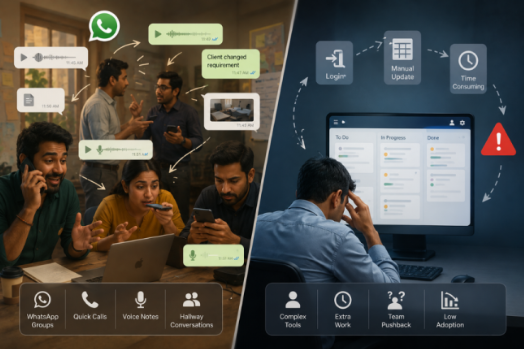

The moment a project involves more than one team, coordination becomes the real challenge, not the individual work itself. Different teams may have separate responsibilities, deadlines, dependencies, and priorities that need to stay connected. The right software should provide shared visibility, clear ownership, and timely updates across teams without creating unnecessary complexity. It should also make cross-team dependencies easier to track, helping managers identify bottlenecks early and keep everyone working towards the same project goals.
Why Multi-Team Projects Break Down Without Structure
When a single team owns a project, communication happens naturally through daily standups and shared context. Add a second or third team into the mix, each with their own priorities and working styles, and that natural coordination disappears fast. Without a shared, structured system, teams end up working from different assumptions about timelines, ownership, and current status, which usually surfaces only once something has already gone wrong.
What IT Project Management Software Needs to Handle
| Requirement | Why It Matters |
| Cross-team visibility | Each team can see relevant progress from others without asking directly |
| Shared timelines | Everyone works from the same view of deadlines and milestones |
| Permission control | Teams see what’s relevant to them without unnecessary clutter or access issues |
| Centralised communication | Reduces reliance on scattered emails and separate chat threads |
Genuine it project management software needs to support all of these simultaneously, since multi-team projects fail most often at the coordination points between teams, not within any single team’s own work.
Comparing This to Standalone Best Project Tracking Tools
Many best project tracking tools do a solid job of tracking tasks within a single team’s workflow, but weren’t necessarily designed with multi-team coordination as a core feature. When several teams need shared visibility, clear handoff points, and consistent timelines, software built specifically to support this kind of structure tends to outperform tools that were designed primarily for single-team use and later stretched to accommodate more complexity.
Building Coordination Into the Tool, Not Just Hoping It Happens
The most reliable multi-team projects aren’t the ones where communication happens to work out, they’re the ones where the software itself is structured to support cross-team visibility and clear handoffs by default, rather than depending on everyone remembering to update everyone else manually.
Managing Dependencies Between Teams
Dependencies become one of the biggest coordination challenges when multiple teams contribute to the same project. A development team may be waiting for designs, while the testing team depends on completed development work before beginning its own tasks. If these relationships are not visible, one delay can quickly affect several teams without everyone understanding why their work has been pushed back.
Effective IT project management software should make these relationships visible. Teams can identify which tasks are dependent on other work and understand what needs to happen before their own responsibilities can move forward. This creates greater accountability without requiring managers to constantly chase individual teams for updates.
Clear dependency tracking is especially valuable for projects with several workstreams running at the same time. Instead of treating each team’s task list as a separate area, the software can provide a connected view of how the different workstreams contribute to the overall project.
Keeping Everyone Aligned on Deadlines
Shared deadlines are another important part of multi-team coordination. Individual teams may have their own internal deadlines, but those dates ultimately need to support the wider project schedule.
A central timeline allows teams to see important milestones and understand how their work contributes to them. When one deadline changes, the impact on related activities becomes easier to assess. This can help project managers communicate changes quickly and prevent teams from continuing to work towards dates that are no longer realistic.
This is an area where best project tracking tools can provide considerable value when they offer more than simple task completion indicators. A useful platform should connect tasks to milestones and deadlines so teams can understand not only what needs to be completed but also when their contribution is needed.
Reducing Duplicate Work
Multi-team projects can also create unnecessary duplication. When teams cannot easily see what others are working on, two groups may unknowingly complete similar tasks or gather the same information independently.
Centralised project information reduces this risk by giving authorised users access to relevant task and progress details. Teams can check existing work before starting something new and identify opportunities to coordinate responsibilities.
This does not mean every employee needs access to every project detail. Permission controls allow organisations to provide the right level of visibility while keeping sensitive or unrelated information separate.
Supporting Clear Handoffs
A project handoff should not depend entirely on a message saying that work is ready. Teams need to know what has been completed, what remains outstanding, and whether there are any issues that the next team should be aware of.
Structured workflows can make these handoffs more consistent. When a task reaches a defined stage, the responsible team can be notified and the relevant information can remain attached to the task itself. This reduces the need to search through old conversations for context.
For example, when development completes a task, testing can receive the work with its current status, supporting information, and relevant deadline already visible. This makes the transition clearer and reduces unnecessary back-and-forth.
Giving Managers a Complete Project View
Managers overseeing multi-team projects need a wider perspective than individual team leads. They need to know whether the project is progressing as planned, which teams are facing blockers, and whether one delayed workstream could affect the final delivery date.
Best project tracking tools can help provide this wider view through dashboards, timelines, task summaries, and status reporting. Instead of requesting separate updates from every team, managers can use centralised information to identify where attention is needed.
This also makes project reviews more focused. Discussions can centre on actual blockers, changing priorities, and upcoming milestones rather than spending most of the meeting collecting basic status information.
Scaling Workflows as Projects Become More Complex
The coordination needs of a small project are very different from those of a large programme involving several departments. As the number of teams and tasks increases, informal communication becomes harder to maintain.
A scalable system should therefore allow organisations to create structured workflows without making them unnecessarily complicated. Teams should be able to maintain their own processes while still connecting their work to shared project objectives.
The right balance is important. Too little structure creates confusion, while too much administrative complexity can discourage teams from keeping information updated. The software should make coordination easier rather than becoming another task that employees have to manage.
Conclusion
Multi-team projects need software built for coordination, not just task tracking within individual silos. TaskOPad Solutions Private Limited helps IT teams keep multiple teams aligned around one shared and accurate view of project progress. By bringing tasks, deadlines, dependencies, and updates into a central system, teams can coordinate responsibilities more effectively and reduce communication gaps. This shared visibility makes it easier to manage cross-team work, identify potential delays, and keep complex projects moving towards their planned goals.